Key Takeaways
Solar panel degradation reduces panel efficiency over time.
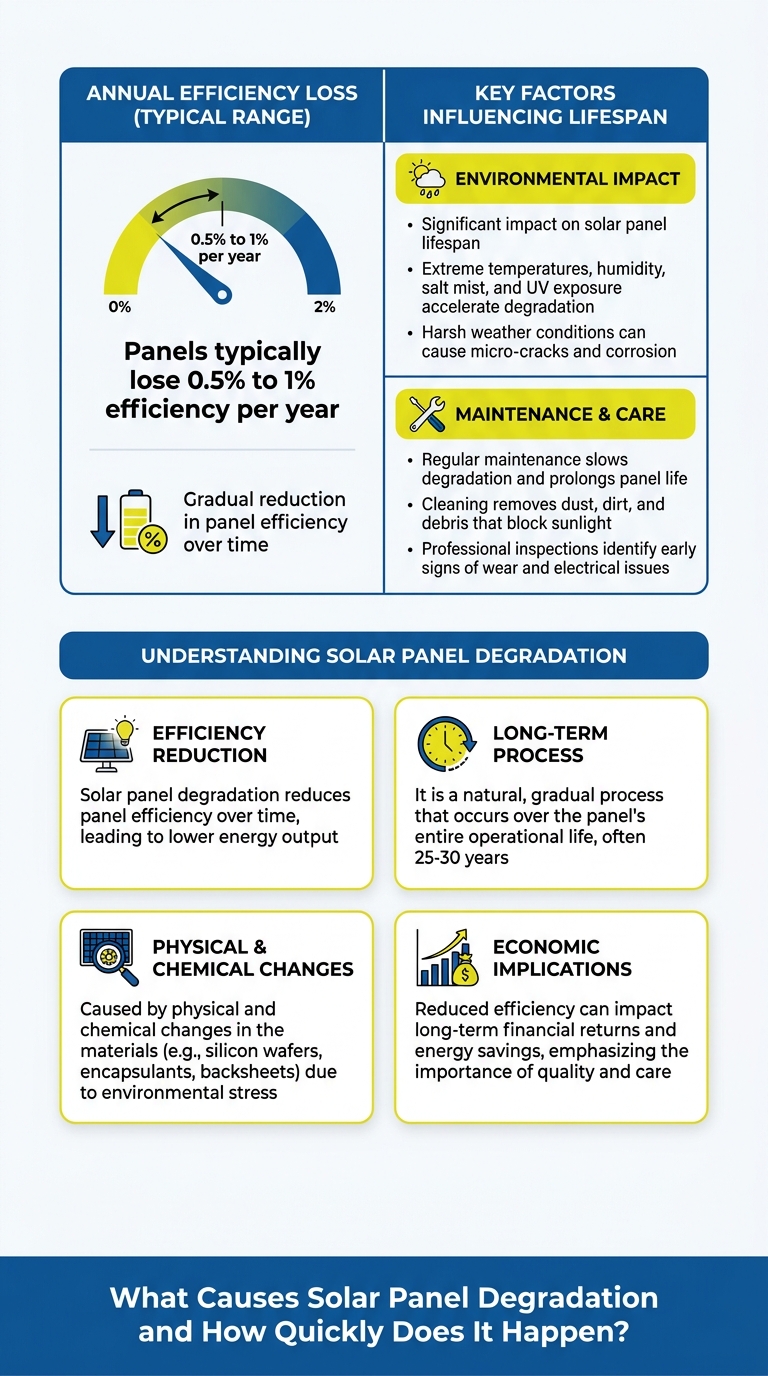
Panels typically lose 0.5% to 1% efficiency per year.
Environmental conditions significantly impact solar panel lifespan.
Regular maintenance slows degradation and prolongs panel life.
Key Answer
Solar panel degradation refers to the gradual reduction in a panel’s power output over time. Panels typically lose 0.5% to 1% efficiency per year, influenced by environmental and installation conditions.
Solar panels are a fantastic way to harness renewable energy, providing environmental and financial benefits over their lifespan. However, like all technology, solar panels face degradation over time. What Causes Solar Panel Degradation and How Quickly Does It Happen? Understanding these factors is crucial for maximising your investment in solar energy.
What Solar Panel Degradation Actually Means
Solar panel degradation is a term used to describe the slow but inevitable decline in the panels’ ability to convert sunlight into electricity. This degradation is a natural process that occurs over time, affecting the overall efficiency and energy output of the solar panels. While all solar panels experience some level of degradation, understanding what it entails can help you manage expectations and maintenance for your system.
In essence, degradation affects the solar panel lifespan by reducing its performance, which can influence your energy savings and overall return on investment. Ensuring you understand this process will enable you to plan for future energy needs and maintenance costs.

Understanding the Typical Solar Panel Lifespan
The average solar panel lifespan is approximately 25 to 30 years. During this period, panels continue to generate electricity, albeit with a gradual decline in efficiency. Manufacturers generally guarantee that their panels will maintain at least 80% efficiency at the end of their warranty period, which is often set at around 25 years.
It’s important to note that even after this period, your panels may still work, though their efficiency will be notably reduced. This aspect of solar panel lifespan is crucial for both residential and commercial users in planning long-term energy strategies.
How Quickly Do Solar Panels Lose Efficiency?
Solar panels typically lose about 0.5% to 1% of their efficiency each year. This figure represents the normal rate of panel efficiency loss due to degradation. By understanding this rate, you can better anticipate how your solar system’s performance will evolve over the years.
While these numbers might seem minor annually, they accumulate over time. Therefore, regular inspections and maintenance can help mitigate significant drops in efficiency and prolong the overall solar panel lifespan.
What Causes Panel Efficiency Loss?
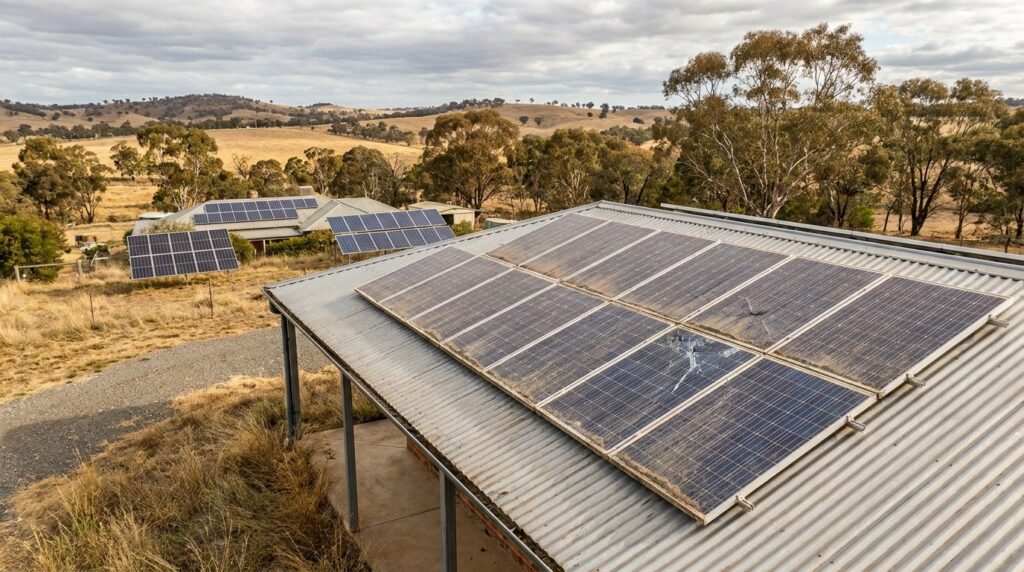
Several factors contribute to panel efficiency loss, including environmental conditions, manufacturing quality, and installation methods. Harsh weather conditions, such as hailstorms or extreme heat, can accelerate ageing solar panels, causing micro-cracks or cell damage that decrease efficiency.
Additionally, poor installation practices, like incorrect angling or inadequate support structures, can lead to premature wear and tear. It’s vital to choose a reliable installer to ensure your system is optimally set up to face local climate challenges.
Moreover, build-up of dirt, dust, and debris can obstruct sunlight from reaching the panels, further impacting efficiency. Regular cleaning can prevent such issues.
Read more here: Solar Panel Cleaning And Servicing Guide 101
Common Signs of Ageing Solar Panels
Common signs of ageing in solar panels include visible wear, such as discolouration or physical damage like cracks. You might also notice a drop in energy output, often evidenced by higher electricity bills if your panels are not compensating adequately.
If your inverter displays unusual error codes or your system has frequent shutdowns, these might be indicators of ageing. Keeping a regular eye on these signs can help you address issues promptly and maintain your panel efficiency over time.
For more tips, refer to our Ultimate Solar Panel Maintenance Checklist.
How Professionals Assess Solar Panel Performance
Professionals use various techniques to assess the performance of solar panels. These can include infrared imaging to detect hot spots and other physical inspections to identify micro-cracks or corrosion. They also check the electrical performance by measuring voltage and current outputs to ensure they meet expected benchmarks.
Regular professional assessments are vital in maintaining your system’s efficiency, and they can help you decide when it might be time for repairs or replacements. Trusting experts to handle these checks ensures comprehensive diagnostics and effective solutions tailored to your specific system needs.
Can You Slow Down Solar Panel Degradation?
While you can’t stop solar panel degradation completely, you can certainly slow it down. Regular maintenance and cleaning are crucial. Keeping the panels free from debris and ensuring their protective coatings are intact will help maintain performance.
Additionally, choosing high-quality panels and installers can mitigate potential degradation. Opting for panels with warranties and robust customer service can also provide peace of mind.
To further protect your investment, consider scheduling seasonal maintenance. Our Seasonal Repair And Maintenance Tips offer valuable insights into keeping your panels in peak condition year-round.
When Should Solar Panels Be Repaired or Replaced?
Determining when to repair or replace solar panels often depends on their condition and performance. If you notice significant physical damage or a substantial drop in efficiency, it might be time to consider replacement.
Panels nearing the end of their warranty that show consistent performance issues, despite maintenance, may also be candidates for replacement. Consulting with solar professionals like Ballarat Solar Company can provide clarity on the best course of action to ensure the efficiency and longevity of your solar power system.
Frequently Asked Questions
The average solar panel lifespan is approximately 25 to 30 years, with panels often maintaining around 80% efficiency by the end of their warranty period.
You can slow down solar panel degradation by ensuring regular cleaning, conducting professional assessments, and choosing high-quality panels and installers.
Common signs include visible wear such as discolouration, cracks, a drop in energy output, and unusual inverter error codes.
Consider replacing your solar panels if they show significant physical damage, a consistent drop in efficiency, or are nearing the end of their warranty with performance issues.
Efficiency loss is caused by factors such as harsh weather conditions, poor installation, and dirt build-up, which obstructs sunlight.

