
Key Takeaways
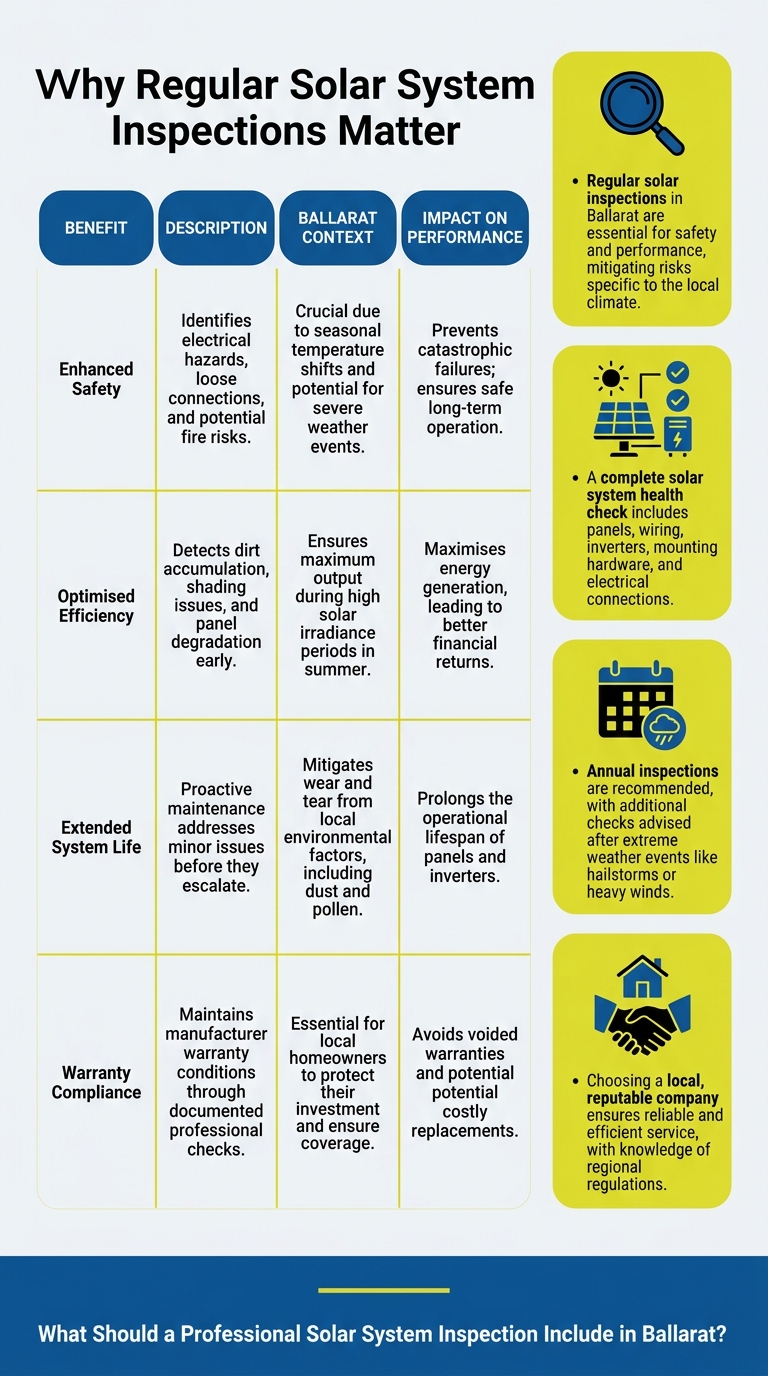
Regular solar inspections in Ballarat are essential for safety and performance.
A complete solar system health check includes panels, wiring, inverters, and more.
Annual inspections are recommended, with additional checks after extreme weather.
Choosing a local, reputable company ensures reliable and efficient service.
Key Answer
A professional solar system inspection in Ballarat should include checking solar panels, roof mounting, wiring, isolators, inverters, switchboards, earthing, and performing thermal tests. Regular inspections ensure safety, optimal performance, and longevity of your solar investment.
If you’re a homeowner in Ballarat, you might be wondering: What should a professional solar system inspection include? Regular inspections are not just a check-up; they’re essential for maintaining your system’s safety, performance, and longevity. In this guide, we’ll explore what a comprehensive solar system health check should cover, why it’s important, and how often you should schedule these inspections.
Why Regular Solar System Inspections Matter
Regular solar system inspections are crucial for several reasons. Firstly, they ensure your system is operating safely. Over time, components such as wiring and isolators can wear out, potentially causing electrical hazards. An inspection can identify and mitigate these risks before they become serious problems.
Secondly, inspections maintain your system’s performance. Solar panels naturally degrade over time, and minor issues like dirt build-up or shading can significantly reduce efficiency. A professional inspection helps ensure your system is performing at its best, saving you money on energy bills and reducing your carbon footprint.
Finally, regular inspections protect your investment by validating warranties. Many manufacturers require proof of periodic maintenance to honour warranty claims. Scheduling an inspection not only prolongs your system’s lifespan but also safeguards your financial investment.

Visual Inspection of Solar Panels and Roof Components
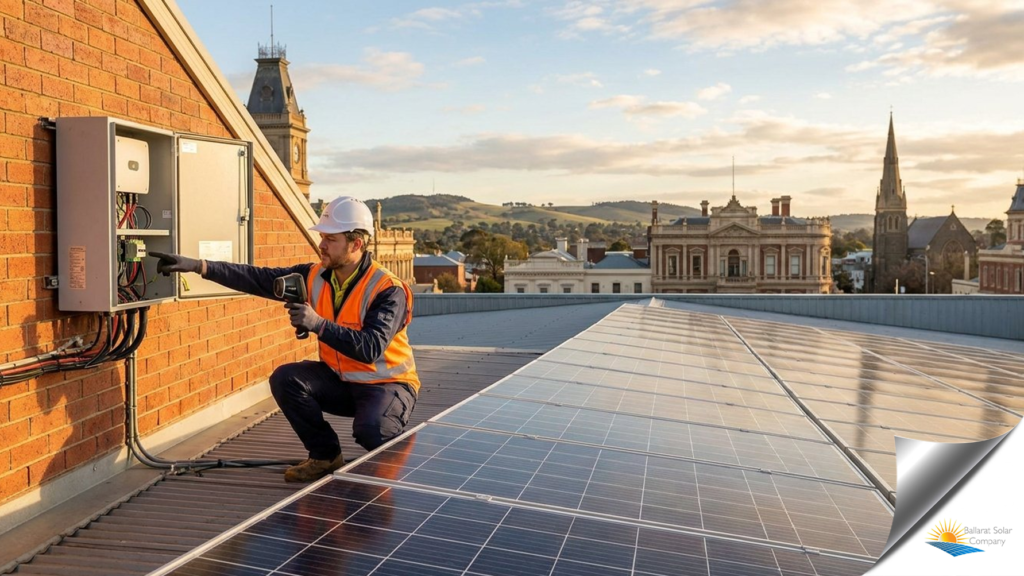
A visual inspection is the starting point of any solar system health check. Professionals will examine your solar panels for cracks, chips, or any visible signs of damage that could affect performance. They will also check for dirt, dust, or debris accumulation that might obstruct sunlight.
Roof components, including mounting hardware, are equally important. Inspectors will ensure that all mounts are secure and free from corrosion. Loose or damaged mounts can lead to panels being dislodged during high winds, common in the Ballarat region. Ensuring the structural integrity of your roof and panels helps prevent costly repairs down the line.
What a Solar Electrical Inspection Covers
A solar electrical inspection is a deeper dive into the electrical components of your system. Inspectors will check the wiring for any signs of wear and tear, which could lead to short circuits or reduced performance. They’ll also inspect DC isolators to ensure they are working correctly, as these are crucial for safely shutting down the system in an emergency.
The inverter is another key component that will be inspected. It’s the heart of your solar system, converting the direct current (DC) generated by your panels into alternating current (AC) for your home. An inspection will ensure the inverter is operating efficiently, checking for error codes or signs of malfunction that could affect your energy yield.
Lastly, the switchboard and earthing will be inspected to ensure they comply with local standards and regulations. Proper earthing prevents electrical faults and enhances safety. This thorough examination helps maintain electrical safety and system efficiency.
Solar Panel Testing and Performance Checks
After the visual and electrical inspections, testing the actual performance of your solar panels is essential. Professionals will use specialised equipment to measure the output of each panel, ensuring they are operating as expected. This can identify any underperforming panels that need attention.
They may also conduct thermal testing using infrared cameras to detect any hotspots or faulty connections that might not be visible to the naked eye. These tests help in diagnosing problems early, preventing more significant issues from developing and ensuring that your panels are producing energy efficiently.
What Is Included in a Complete Solar System Health Check?
A comprehensive solar system health check in Ballarat should encompass both visual and technical assessments. This includes checking your panels, roof mounting, wiring, isolators, inverters, and switchboard. Additionally, thermal testing, system performance assessments, and battery inspections (if applicable) form critical parts of the process.
The goal of such a health check is not just to find faults but to optimise the performance and lifespan of your solar system. It provides peace of mind, knowing that your investment is safe and operating at its full potential.
Component | Inspection Focus |
|---|---|
Solar Panels | Cracks, dirt accumulation, performance output |
Roof Mounting | Corrosion, stability |
Wiring | Wear and tear, connections |
Inverter | Efficiency, error codes |
Switchboard | Compliance, safety |
Earthing | Safety, standards compliance |
Thermal Testing | Hotspots, faulty connections |
Common Problems Found During Solar Inspections
During inspections, professionals often encounter a variety of common issues. Loose or corroded connections are frequent problems that can lead to inefficiencies or even system failure. Faulty isolators are another issue; these are critical for safety, and any malfunctions need immediate attention.
Shading from trees or nearby structures can also impede performance, something often noticed during an inspection. Addressing such issues promptly can prevent drops in energy production and ensure your system is operating efficiently.
How Often Should You Have Your Solar System Inspected?
In Ballarat, it’s recommended to have your solar system inspected annually. This frequency helps catch and rectify any issues early, ensuring your system runs smoothly year-round. However, you should also consider booking an inspection after significant weather events like hailstorms, which are not uncommon in the region.
Routine inspections not only help maintain your system but also provide assurance that your solar investment continues to yield optimal returns, maximising your savings and sustainability efforts.
Choosing the Right Company for a Solar System Inspection
Selecting a reputable company for your solar inspection is crucial. You should look for companies with experience and a good track record in the Ballarat area. A local company will be more familiar with the unique challenges posed by the region’s climate, like hail and high winds.
Consider these tips for finding a reliable installer. It’s important to ensure that the company uses certified professionals who can handle all aspects of the inspection. Transparency and clear communication about findings and recommendations are also key factors when choosing your service provider.
With these guidelines, you can confidently choose a company that will help keep your solar system functioning at its best. For reliable and professional service, consider contacting the Ballarat Solar Company for your next inspection.
Frequently Asked Questions
It’s recommended to have your solar system inspected annually, with additional checks after extreme weather events like hailstorms.
Common issues include loose connections, faulty isolators, shading from trees, and dirt accumulation on panels.
A local company will be familiar with Ballarat’s unique climate challenges and can provide more tailored service.
Yes, regular inspections can help validate warranties by providing proof of maintenance, ensuring coverage for repairs.
Key components include solar panels, inverters, wiring, DC isolators, and roof mounts.

