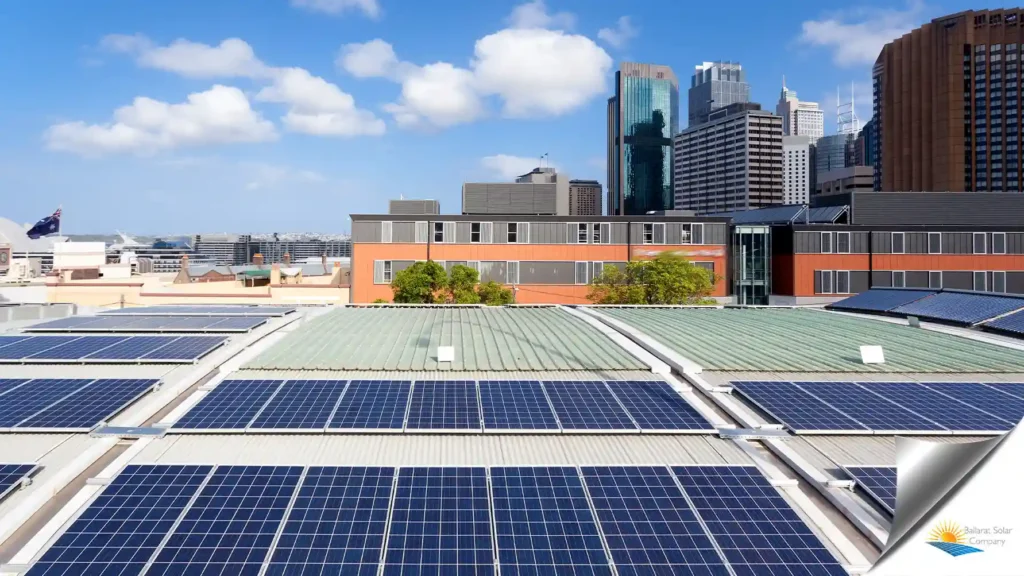
If you’ve been watching power prices bounce around or you’ve just had your first “how is my bill that high?” moment), you’re not alone. Australia’s energy system is changing fast, and solar is right in the middle of it.
Not just because it’s clean, but because it’s become a genuinely practical way to produce electricity where it’s used: on rooftops, warehouses, farms, schools, and solar farms across the country. And as batteries and smarter energy tech become more common, solar is moving from “nice to have” to “the backbone” of Australia’s future power supply.
Let’s break it down, what’s happening, why solar matters so much, and how you can benefit in Ballarat.
Solar isn’t “the future” in Australia; it’s already doing heavy lifting

Australia is one of the world leaders in rooftop solar uptake, and the numbers are seriously impressive. According to Clean Energy Council:
- Rooftop solar supplied 12.4% of Australia’s total electricity in 2024.
- In 2024 alone, over 300,000 rooftop systems were installed, adding about 3 GW of capacity.
- Australia has more than 4 million rooftop solar systems installed overall.
- Battery adoption is accelerating too, close to 75,000 home battery units were sold in 2024.
And here’s a fun, and very real, perspective shift: AEMO (the Australian Energy Market Operator) reported that rooftop solar contributed 13% of electricity to the grid in the first quarter of 2024, more than grid-scale solar, wind, hydro, or gas in that period.
Why solar is central to Australia’s energy future
When we talk about “Australia’s energy future”, we’re not guessing. We’re already living the early chapters.
It’s one of the cheapest new sources of electricity
This is a big reason solar keeps winning. Renewables are the lowest-cost range of new-build electricity, and that this remains true even when you include the extra pieces needed to make the system reliable, like storage and transmission upgrades.
Translation: if Australia needs new power stations to replace ageing coal plants and meet growing demand, solar, paired with the right support tech, is one of the most cost-effective options.
It’s fast to roll out
Big power stations take years. Rooftop solar can be installed in a day or two. Solar farms are typically quicker to build than many other large energy projects. That speed matters as Australia’s electricity demand grows with uptake of EVs, heat pumps, electric cooking, and more.
It works perfectly with the way we use energy
In many homes and businesses, a big chunk of electricity use happens during the day: air con, appliances, office equipment, refrigeration, machinery, and so on. Solar can cover a lot of that directly, and batteries can shift it to the evening.
The three “lanes” of solar in Australia
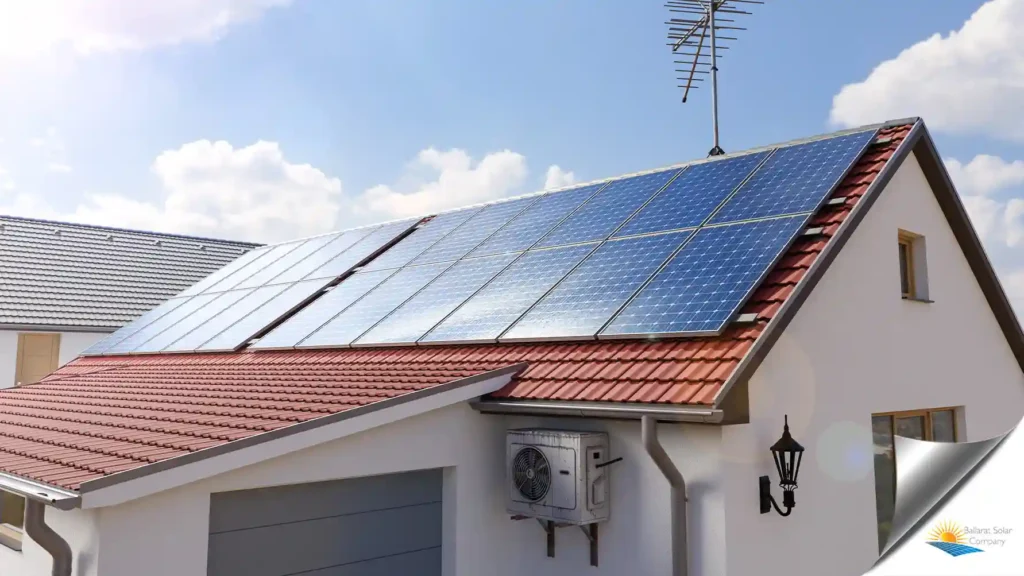
Lane 1: Rooftop solar for homes
Rooftop solar is like turning homes into mini power stations. It reduces the amount of electricity you need to buy from the grid, which is why it’s so often about bill savings.
It also makes the grid more resilient, because power isn’t only coming from a few big generators, it’s coming from millions of rooftops.
The catch: rooftops don’t all produce power at the exact moment it’s needed. That’s where batteries and smarter energy use come in.
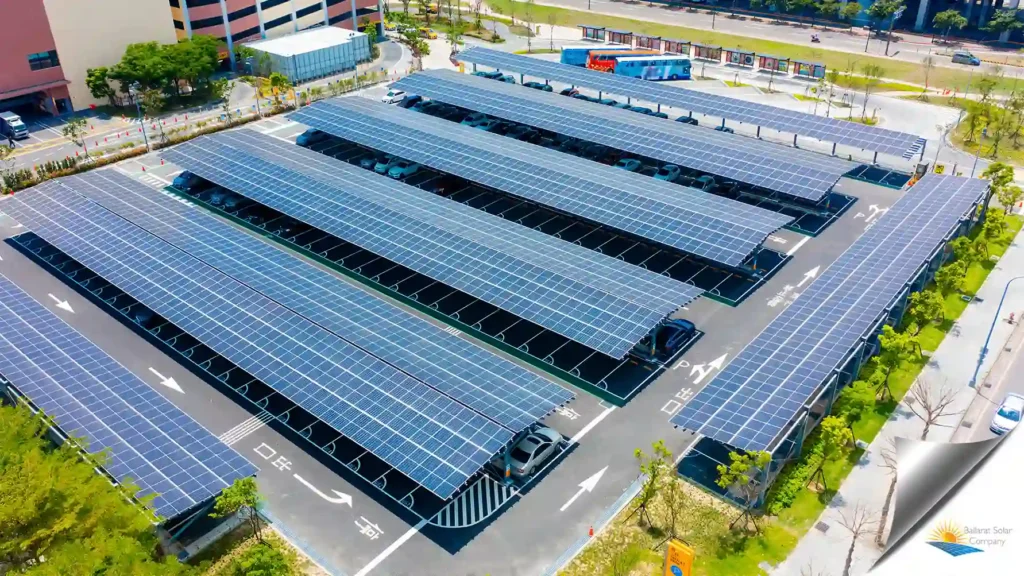
Lane 2: Commercial solar
Commercial solar can be a perfect match for businesses because many operate during daylight hours. That means solar can power your operations directly, often delivering strong returns, especially when designed around your actual load profile.
Businesses can also benefit from battery storage to reduce peak demand charges, smart timers and controls to shift loads into solar hours, and better monitoring to catch faults early.
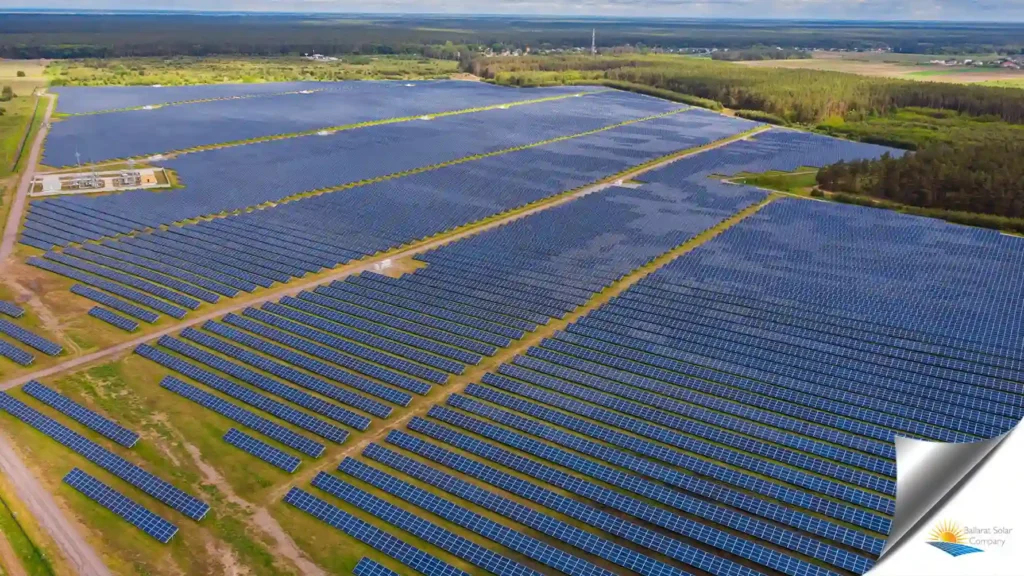
Lane 3: Large-scale solar farms
Solar farms help supply large amounts of electricity to cities and regions. They’re crucial for replacing retiring coal generation over time.
The catch: the best sun isn’t always right next to the biggest demand centres, so Australia needs grid upgrades (transmission) to move that power around efficiently.
The “real” future: solar + storage + smarter energy use
Here’s the simple truth:
Solar is amazing, but it doesn’t solve everything by itself
Solar produces most in the middle of the day. But many households use a lot of power in the morning and evening: heating/cooling, cooking, hot water, lighting, entertainment, EV charging.
So the energy future isn’t “solar only”. It’s: Solar + batteries + flexible demand.
Home batteries
Batteries let you store excess solar during the day and use it at night. They can also help in a blackout, depending on your system design.
Battery support is becoming a bigger national focus. The Clean Energy Regulator describes the Cheaper Home Batteries Program as offering around a 30% discount on the upfront cost for eligible small-scale batteries, based on usable capacity, and gradually decreasing until 2030.
As always, eligibility rules matter, and programs change, but the direction is clear: Australia is encouraging battery uptake.
Virtual Power Plants (VPPs)
A VPP is when thousands of home batteries are coordinated, with permission, to support the grid at key times. It’s like having a “team” of batteries that can help reduce peak demand.
You don’t need to be an energy nerd to benefit; you just need a system designed and installed properly, with the right settings and compatible equipment.
Smarter energy use
Sometimes the cheapest win isn’t more hardware; it’s changing when you use electricity.
Examples:
- Running the dishwasher and washing machine during solar hours
- Heating hot water in the middle of the day
- Scheduling EV charging for daytime or off-peak
- Pre-heating or pre-cooling your home when solar is pumping
This is where solar becomes more than panels; it becomes a household energy system.
So what about “too much solar” and export limits?
You might’ve heard people say, that feed-in tariffs are low now, the grid won’t let you export much, or solar isn’t worth it anymore.
Here’s the honest version:
Yes, exports can be limited, but solar can still be very worth it
In some areas, networks apply export limits to protect the grid, especially during high-solar periods. That can reduce how much you earn from exporting electricity.
But the biggest savings usually come from using your solar directly; powering your home or business instead of buying from the grid. A well-designed system focuses on:
- matching your system size to your usage
- choosing the right inverter and monitoring
- planning for battery readiness (even if you don’t buy one today)
- using smart controls and timers
A “bigger” system isn’t always a “better” system. Design matters.
The grid upgrades that make solar work for everyone
Australia is building a new kind of electricity system: less centralised, more renewable, more “two-way”, because homes export as well as import.
AEMO’s Integrated System Plan (ISP) is essentially the roadmap for the National Electricity Market’s transition, outlining the mix of generation, storage, and network upgrades needed out to 2050. This means:
- more renewables – solar and wind
- more storage – batteries, pumped hydro, and other tech
- stronger transmission lines to move power where it’s needed
- smarter systems to manage two-way energy flow
What this means for Ballarat
Victoria is pushing hard on renewables and storage, with legislated renewable energy targets of 40% by 2025, 65% by 2030, and 95% by 2035. And Victoria has legislated energy storage targets too, which supports the “solar + battery” future).
Rebates that can make solar more affordable
Solar Victoria offers a solar panel (PV) rebate up to $1,400 for eligible homes, with an option of an interest-free loan to match the rebate amount.
If you’re in Ballarat, the smartest approach is usually:
- design around your current and future usage
- make the system battery-ready
- choose quality components and a clean install
What you can do right now
For homeowners
Check your daytime usage: If you’re mostly out all day, you’ll benefit from smart scheduling and/or battery planning.
Don’t guess your system size: Bigger isn’t always better. A tailored design beats a “one-size-fits-all” quote.
Plan for your next 5–10 years: EV on the horizon? Switching from gas to electric heating/hot water? Design for that now.
Get monitoring from day one: Monitoring helps spot issues early (like inverter faults or underperformance).
Keep maintenance in mind: Solar is low-maintenance, not no-maintenance. Periodic checks protect performance and warranty compliance.
For businesses
Review your load profile: When you use energy matters as much as how much you use.
Consider staged upgrades: Solar now, battery later is common, as long as the system is designed that way.
Use controls: Timers, smart relays, and energy management can boost solar self-use dramatically.
Ready to get your solar system future-proofed?
If you’d like help figuring out the best next step, whether it’s a new solar install, a system upgrade, battery readiness, inverter replacement, or maintenance and fault-finding, reach out to Ballarat Solar Company.
We’ll keep it simple: we’ll look at your usage, your roof, and your goals, then recommend a system that makes sense now and still makes sense in 5 to 10 years.
Want a quote or a quick chat? Get in touch, and we’ll help you map out the smartest path forward.