Updated December 2025
Ballarat’s climate is never boring. Cold, damp winters, the odd hailstorm and increasingly hot, dry summers all put your solar system to the test. As more households and businesses rely on solar to keep energy bills under control, it’s becoming more important to give those panels a little seasonal care.
Seasonal solar panel maintenance doesn’t have to be complicated or technical. With some simple checks and occasional professional servicing, you can keep your system producing safely and efficiently all year round. This guide walks through how Ballarat’s changing seasons affect your solar, and what to focus on in spring, summer, autumn and winter.
Why seasonal solar maintenance matters in Ballarat
While they are designed to last for decades, solar panels perform best when they are looked after. These are not “set and forget”. A little bit of care each season can make a big difference:
Better performance: Dust, leaves and grime can easily shave 5–20% off your output if left to build up.
Safety: Loose wiring, damaged isolators or water ingress are fire and electric-shock risks.
Longer lifespan: Regular checks catch issues early, before they become expensive failures.
Warranty protection: Many manufacturers and local programs (like Solar Victoria) expect your system to be serviced by a licensed solar installer at least every 2 years.
Safety before you do anything
Before thinking about when to clean or what to inspect, it’s worth setting some ground rules about safety.
Most homeowners can safely perform simple visual checks from the ground and keep an eye on inverter readings. Anything involving roof access, electrical testing or repairs should be left to a professional. Solar panels and associated cabling are live whenever there is sunlight, regardless of whether you’ve turned off a switch in the house.
A few simple rules help keep things safe:
- Stay on the ground wherever possible and use binoculars or a zoomed-in phone camera to inspect panels.
- Never walk or stand on panels; they can crack or become extremely slippery.
- Avoid pressure washers, harsh chemicals or metal tools on the panel surface.
- Don’t open isolators, junction boxes or your inverter casing yourself.
- If you suspect damage or see inverter fault lights, follow the shutdown procedure on your switchboard and contact a licensed electrician or accredited installer.
With that in mind, let’s look at how to care for your system through the seasons.
Spring: Preparing for peak solar production
Spring is a natural time to reset after winter and prepare for the high-production months ahead. Days are getting longer, and your system has just come through a period of cold, wet weather that may have left its mark.
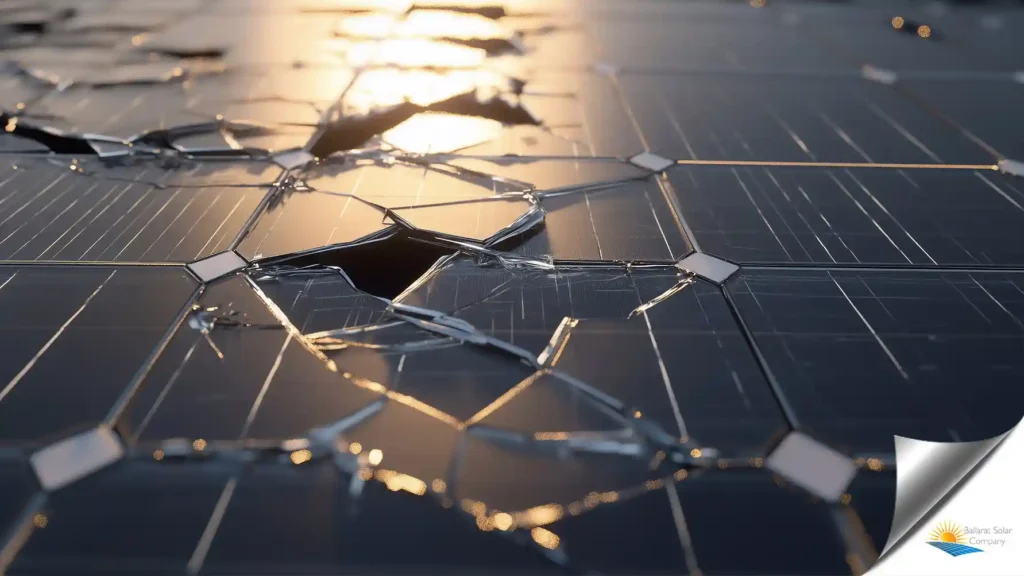
Start with a visual check from the ground. Look over the array for obvious signs of trouble, such as cracked glass, panels sitting at odd angles, or a noticeable build-up of dirt and grime. Take a moment to look at the surrounding roof area as well. Gutters may be partly blocked, and overhanging branches might have crept closer to the panels over the years.
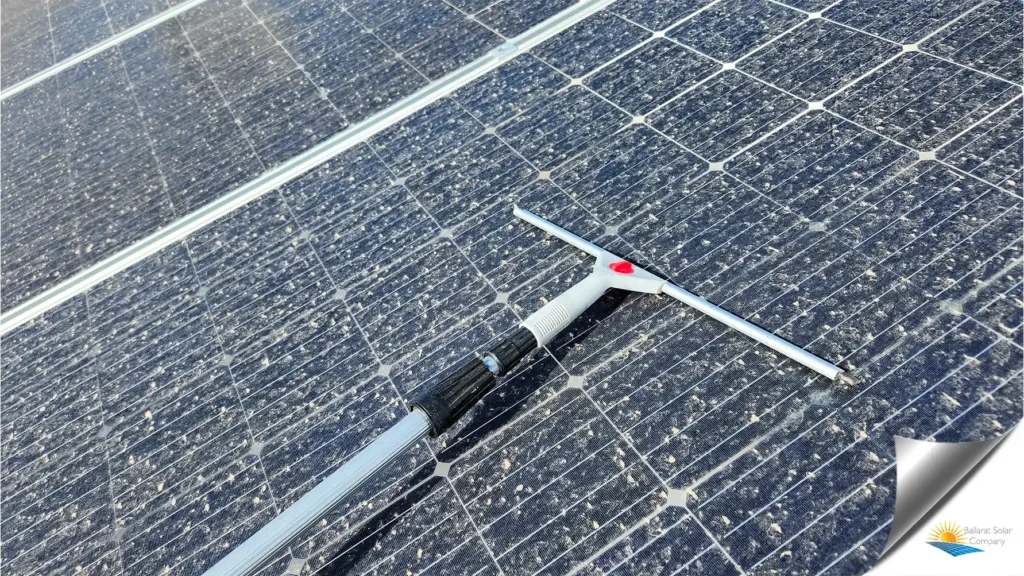
If you can safely do so from the ground, a gentle rinse of the panels in spring can help remove winter grime. Use a regular garden hose on a soft spray, choosing a cool morning or late afternoon rather than the middle of a hot day. Avoid any aggressive scrubbing or high-pressure cleaning. On steep or double-storey roofs, or if the panels are heavily soiled, it’s better to organise a professional clean.
Spring is also an ideal time to look at your monitoring. Check the inverter display or app on clear days and compare production to what you’d expect for that time of year. You don’t need to know exact figures, but you should get a sense of what “normal” looks like. If production seems much lower than previous springs, or your bills suggest you’re importing more power than usual, it may be time to book a service.
Finally, if it has been close to two years since your system was last serviced, spring is a good moment to schedule a professional inspection. An accredited installer can check the mounting hardware, cabling, isolators and inverter, clean the panels properly and confirm the system is safe and performing as it should.
Summer: Managing heat, dust and bushfire conditions
Summer is when your system should be working hardest. Long days and strong sun can deliver excellent production, but heat, dust and bushfire conditions bring their own challenges.
High temperatures naturally reduce panel efficiency a little, so a small drop in output on very hot days is normal. However, heat also stresses electrical components and can accelerate wear if there are already minor issues. It’s worth keeping an eye on your system more closely during extended heatwaves.
Dust, pollen, and, in bad bushfire seasons, ash can settle on the panel surface and build up over time. In Ballarat and surrounding areas, this is often most noticeable later in summer after a run of dry, windy days. A light build-up might only trim a few percent off your output, but thicker deposits can have a much larger impact.
During the summer, you can:
- Check panels occasionally from the ground for a dull or dusty appearance.
- Inspect the roof and ground for dry vegetation under or around the array and clear it away to reduce fire risk and improve airflow.
- Monitor your inverter or app during heatwaves to see whether production looks roughly in line with previous summers on similarly clear days.
If you decide to hose panels in summer, choose the cooler ends of the day and avoid spraying very cold water onto extremely hot glass. Sudden temperature changes can stress the panel surface. As always, if the panels are difficult to reach or the roof is steep, leave cleaning to a professional.
If you ever notice discolouration on panels, melted plastic around connectors, a strong electrical smell or visible damage after extreme heat, shut the system down using the instructions next to your switchboard and call a professional straight away.
Autumn: Leaves, wind and early storms
As the weather cools and leaves start to fall, autumn brings a different set of maintenance issues. This is the season when gutters fill quickly, small branches come down in the wind, and debris can gather in roof valleys and around panels.
A walk around the property from ground level is often enough to pick up potential problems. Look for piles of leaves in gutters near the array, and note any spots where leaves seem to be collecting on the panels themselves. Even small patches of shading can affect performance and create “hot spots” on the panel surface.
Autumn is also a good time to think about storm impacts. After strong winds or heavy rain, take a moment to look up at the system and the surrounding roof. Panels should still be sitting evenly in their frames, with no corners lifted and no obvious gaps underneath. If you can see fallen branches within the array or tiles that look disturbed, avoid climbing up to investigate yourself and call your installer or a roofer.
Inside the home, pay attention to the ceilings under the array. Water stains, damp patches or mould can indicate that a roof leak has developed near the mounting points or cable penetrations. While the leak may not be directly caused by the solar installation, it’s important to get it checked before winter sets in, and the problem grows.
If you noticed minor issues earlier in the year, autumn is often the most comfortable time to arrange repairs before conditions become colder and wetter.
Winter: Cold, damp and reduced daylight
Winter in Ballarat brings short days, low sun angles and plenty of cold and damp. Your solar production will naturally be lower than in summer, but that doesn’t mean your panels are doing nothing. In fact, solar cells often perform efficiently in cool conditions when the sun is out.
The key in winter is to prevent moisture-related problems and keep an eye on performance. Light rain will usually help rinse panels, but it can also highlight or worsen any existing weaknesses in seals or roof penetrations.
From ground level, look for signs of persistent fogging or moisture between the layers of glass in a panel. That can indicate that the panel’s seal has been compromised. Check surrounding roof areas for excessive moss, mould or water pooling that might point to drainage issues.
After hailstorms or severe winter fronts, it’s worth doing a more deliberate visual inspection. Look for chipped or shattered glass, dented frames or panels that no longer appear flat. If you suspect hail damage, switch off the system using the shutdown instructions and arrange for a licensed electrician or accredited installer to inspect it before turning it back on.
On bright winter days, glance at your inverter or app to make sure the system is still producing in line with expectations for the season. You won’t see summer numbers, but you should see steady output that roughly matches the weather.
What to do after extreme weather at any time of year
Ballarat is no stranger to severe weather: heavy rain, high winds, hail and heatwaves can all arrive with little warning. After any significant event, a simple routine helps protect both your system and your home.
Stay safe first
If there’s flooding, visible damage or fallen power lines, keep clear and follow emergency service advice.
Do a visual check from the ground
Look for broken or shattered glass, panels that look displaced or tilted differently, loose or hanging cables, and damaged roof tiles around the array.
Check your inverter
Look for warning lights or error messages. If you see anything abnormal, follow the shutdown procedure and call an installer or electrician.
Organise an inspection
Even if everything looks okay, it’s wise to have an accredited solar electrician inspect the system after major hail, lightning strikes or roof damage
DIY checks vs professional servicing
Homeowners can do quite a lot to keep an eye on their solar system without ever leaving the ground. Regularly looking at the panels, roof and gutters from a safe position, lightly hosing accessible panels, and checking inverter lights and app data are all reasonable DIY tasks.
However, there is a clear line where professional help is essential. Anything involving roof access, opening electrical equipment, testing circuits or repairing components should be handled by a licensed electrician or CEC-accredited installer.
Working at heights and around live DC electricity is hazardous without the correct training and equipment.
A simple way to think about it is:
- You handle the observing and basic cleaning where it’s safe.
- A professional handles the testing, diagnosing and repairing.
This approach keeps costs reasonable while ensuring that safety and compliance are not compromised.
How often should solar systems be serviced in Ballarat?
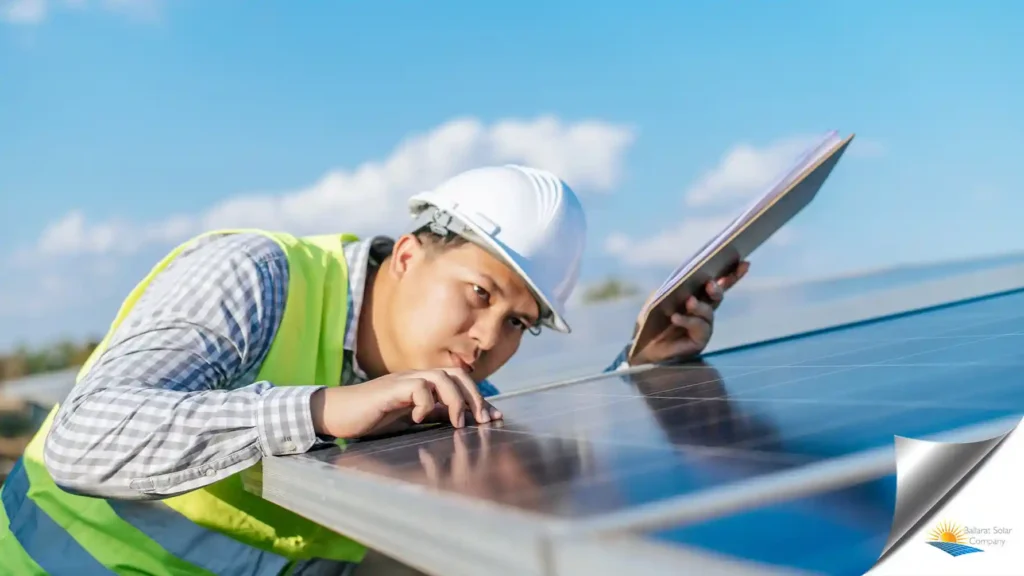
As a general rule, most residential solar systems benefit from a professional service roughly every two years. That interval allows an electrician or accredited installer to check that the system is still mechanically sound, electrically safe and operating efficiently.
Some properties will need attention more often. Homes surrounded by large trees, busy roads or industrial activity may see more debris and pollution on their panels. Rural properties can attract more dust and bird activity. In those cases, a yearly clean and a slightly shorter service interval may be worthwhile.
In between professional visits, it’s helpful to:
- Do a quick visual check around once a month.
- Keep gutters and roof areas near the array reasonably clear.
- Look into any unusual inverter messages or sudden changes in power bills promptly, rather than waiting for the next service.
Always refer to your system documentation as well. Some manufacturers specify service requirements as part of their warranty conditions, and following those guidelines helps protect your coverage.
Need help with seasonal solar maintenance in Ballarat?
Looking after your solar system is one of the simplest ways to protect your investment and keep your bills down. A little seasonal attention from you, backed up by regular professional servicing, will help your panels perform well through Ballarat’s coldest winters and hottest summers.
If you’d like an expert to take care of it, Ballarat Solar Company can inspect, clean, test and service solar systems across Ballarat and surrounding areas. Whether you’ve just been through a major storm, you’re heading into summer, or you simply feel your system isn’t performing as it should, we’re here to help.
Get in touch today to book a seasonal “solar health check” or to talk through any concerns you have about your existing solar installation.
FAQs
Do I really need to clean my solar panels?
In many parts of Ballarat, rain will do a reasonable job of rinsing panels, but it rarely removes everything. Over time, a film of dirt, pollen and bird droppings can build up, especially near trees, busy roads or farmland. A periodic clean can restore lost production. How often you need it depends on your location; some homes are fine with cleaning every couple of years, while others benefit from yearly attention.
Can I get up on the roof and clean them myself?
If your roof is low-pitch, single-storey, and you are confident working at heights with the right safety equipment, you may be able to clean panels yourself. However, many Ballarat homes have steeper or higher roofs, and the risk of falls is significant. For most people, it is safer and more efficient to have a professional cleaner or solar installer handle roof-level work.
Why is my system producing less than it used to?
There are many possible reasons for reduced production. Seasonal changes in sunlight, new shading from trees or nearby buildings, dirty panels, ageing components, and faults in wiring or the inverter can all play a role. If the drop is sudden or seems large compared to previous years, it’s a good idea to have the system checked. A professional can test each part of the system and identify whether it’s a simple cleaning issue or something more serious.
Are solar panels still worth it in Ballarat’s winter?
Yes. While winter output is lower than in summer because of shorter days and lower sun angles, panels still generate useful electricity on bright days. Cooler air temperatures can actually help solar cells operate more efficiently. Keeping panels clean and avoiding shading ensures you get the most from your system even in the middle of winter.
What are the main warning signs I shouldn’t ignore?
Some signs that deserve immediate attention include:
Inverter lights are changing from green to red or flashing, or repeated error messages.
A noticeable burning smell or unusual buzzing sound near solar equipment.
Cracked or shattered panel glass or panels that appear to have shifted after storms.
Sudden, unexplained jumps in your electricity bill despite similar usage.