If you’re heading off this Christmas – maybe down the coast, up to Melbourne, or away visiting family – your solar system will still be hard at work back home in Ballarat. While you’re relaxing, those panels are soaking up the summer sun and quietly helping to offset your power bills.
A little bit of planning before you leave can make a big difference. With a few sensible checks and tweaks, you can keep your home safe, avoid wasted energy, and make sure your solar is doing its best work while no one’s even there.
This guide walks you through simple, practical steps you can take before you pull out of the driveway, and a few quick checks for when you return.
Before You Pack, Give Your Solar a Quick Health Check
In the rush of getting ready for Christmas, it’s easy to forget about the gear on your roof. But a quick look around now can save headaches later.
Start by taking a walk around your property and looking up at your panels from the ground. You’re not trying to assess every nut and bolt, just making sure nothing looks obviously wrong. Panels should appear flat and secure, without cracks, chips, or anything hanging off them. If you’ve got trees nearby, check whether branches are starting to grow over the roof or brush close to the panels.
Then have a look at your inverter. Most inverters will have a small display screen or a set of indicator lights. If everything is running normally, you’ll usually see a steady green light or a reading that shows power being produced during the day. If you notice red lights, error symbols or the screen is completely blank when it should be on, that’s worth investigating.
If your recent electricity bills show a sudden drop in solar generation, or you already suspect something wasn’t quite right, it’s better to get that sorted before you leave rather than hoping it behaves while you’re away.
You should consider calling a licensed solar installer if you notice:
- Error codes or warning lights on the inverter
- Switches tripping regularly on your switchboard
- Exposed or damaged-looking conduit or cabling
- Obvious physical damage to panels or mounting
Sorting out small issues before Christmas means you’re more likely to come home to a system that’s been performing well the whole time you’ve been away.
Set Up Your Solar Monitoring
If your system has a monitoring app or online portal, your holiday is actually a great opportunity to make use of it. Being able to see how things are going back home, even with a quick glance, is very reassuring.
Before you leave, check that you know how to log in and that the app is working properly on your phone. If you haven’t opened it in a while, do a quick run-through: open the app, make sure data is updating, and familiarise yourself with the basic screens so you know what “normal” looks like.
Many systems allow you to set up alerts or notifications. Turning these on means you don’t have to constantly check the app. Instead, you’ll only get a ping if something’s gone wrong, like an inverter fault or a sudden drop in production.
Once you’re on holiday, you don’t need to obsess over the graphs. A quick look every now and then is enough to confirm that your solar is generating power and exporting energy to the grid, even while your house is mostly sitting idle.
Make the Most of Exports and Your Feed-in Tariff
When no one’s home during the day, your electricity consumption usually drops right down. From a solar point of view, that can be a real win. Instead of your solar power being used by appliances in the house, more of it gets exported back to the grid, earning you credits.
It’s worth spending a few minutes before you go away to understand how your plan works. Look at your electricity bill or your retailer’s app to see your:
- Feed-in tariff rate (what you’re paid per kWh exported)
- Usage rates (what you pay per kWh you import)
This gives you a feel for how valuable those exports really are.
If you’ve got larger loads like a pool pump, heat pump hot water system or EV charger, try to schedule them thoughtfully. For example, if you’re leaving a car at home that needs a bit of a top-up, set the charging window for late morning to mid-afternoon rather than overnight, so it’s more likely to run on solar.
The aim is to let your home use solar when it makes sense, but not chew up so much power that you wipe out the benefit of all that extra export. A little bit of planning here can mean a much nicer surprise when your next bill arrives.
Put Appliances into “Holiday Mode”
Even when you’re not home, modern houses quietly leak electricity through standby power. Little lights glowing on TVs, gaming consoles, sound bars, printers, and chargers all add up across a few weeks.
Before you leave, walk from room to room and look for anything that doesn’t truly need to stay on. If it’s not critical and it has a standby light or power brick, it’s a good candidate to switch off at the wall.
Typically, you can safely turn off:
- TVs and entertainment systems
- Gaming consoles and home office equipment
- Extra fridges or freezers that you’ve emptied for the break
- Phone and laptop chargers are not in use
On the other hand, some things are best left alone. Your main fridge, security system, modem (if it supports alarms or cameras), and any essential smart devices usually need to remain powered.
Smart plugs and timers can help you keep a couple of lamps or devices running on a schedule so the house still appears lived-in at night, without drawing unnecessary power around the clock. It’s a simple way to balance security, comfort and efficiency.
Get the Settings Right for Hot Water, Heating and Cooling
In Ballarat, summer can swing from beautifully mild to surprisingly hot, so it’s worth thinking through how your hot water and climate control will operate while you’re not around.
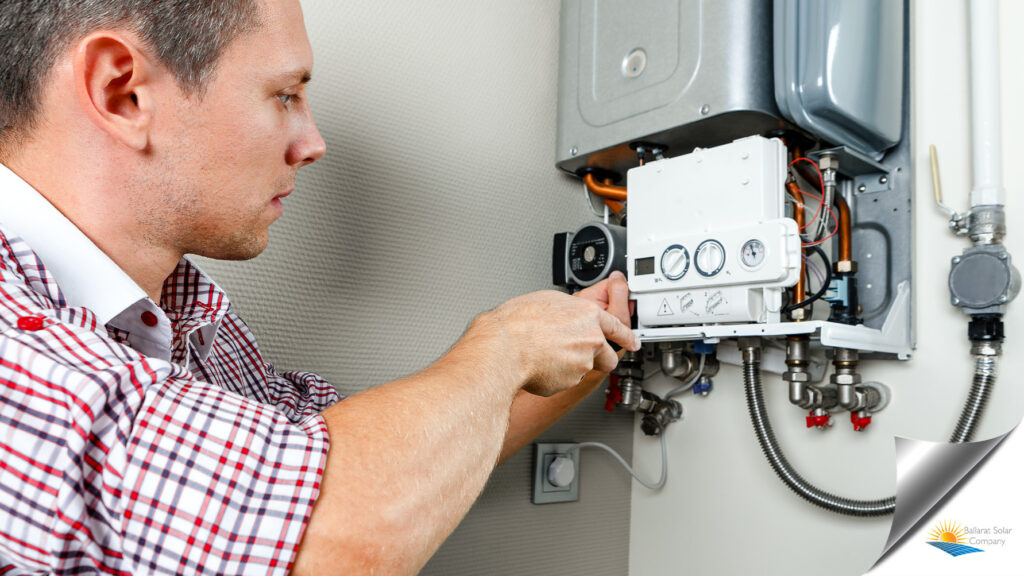
If you’ve got an electric or heat pump hot water system, check how it’s currently set up. Many are already on timers or controlled to run at certain times of day. Ideally, you want it heating mainly when your solar is active, not in the middle of the night. If you’re going to be away for an extended period, you might speak with your installer or electrician about whether it’s sensible to adjust the settings or temporarily turn it off, making sure it’s done safely and appropriately.
For split-system air conditioners, the approach depends on whether anyone – or anything – is staying behind. If pets or plants will be at home, you might want to keep a safety margin on temperature without letting the system run flat out.
A few handy habits include:
- Setting the temperature a little higher than usual
- Using timers so the system isn’t running 24/7
- Drawing curtains and blinds to naturally keep the house cooler
Together, these tweaks help protect your home environment without letting your air conditioner become the biggest energy user in an empty house.
Holiday Settings For Battery Storage
If your Ballarat home has a battery, you’ve got extra options for how your system behaves while you’re away. It’s worth checking your battery’s operating mode a week or so before you leave so you have time to make adjustments.
Most systems will allow you to choose between modes that prioritise self-consumption, time-of-use savings, backup, or exports. Over the holidays, your goals might be a bit different. You may want to make sure your battery maintains a good reserve in case of a summer outage, especially if fridges and freezers are running, but you might not need to keep as much energy back for evening usage when no one’s home.
Good practice before your trip includes:
- Confirming your battery is connected and visible in your monitoring app
- Making sure its time schedules and modes match your current tariff and holiday plans
- Setting a reasonable backup reserve, particularly if your area is prone to storms
If you’re uncertain about which settings are best, your installer can usually suggest a good “holiday profile” based on your battery brand and your electricity plan.
Protecting Your Solar from Summer Storms
Victorian summers often come with sudden storms, strong winds and lightning. Your solar system is built to handle the elements, but there are still a few sensible precautions that can reduce risk.
Surge protection on your home’s electrical system can help protect appliances and your solar inverter from voltage spikes caused by lightning in the area. If you’re not sure whether your switchboard has suitable protection, it’s something worth asking a licensed electrician to check.
Also, take a look at the condition of external switches and isolators. They should be intact, with no obvious cracks, corrosion, or signs of water damage. These components are critical for safety and should be kept in good condition.
If you’ve got large trees near your roof, think about how they behave in strong winds. Heavy branches directly above the house are worth discussing with an arborist for trimming or removal. This protects not just your panels, but your roof in general.
Any work on the solar system itself – including isolators, wiring or panels – must be done by a licensed professional. Your role as the homeowner is just to notice potential risks and call in the right help in a timely manner, rather than in an emergency.
Keeping Your Solar Secure While You’re Away
Properly installed solar is usually quite secure. Panels are bolted firmly to the roof, and inverters are fixed to the walls. Theft or tampering is uncommon, but it’s still smart to consider basic home security as part of your holiday prep.
If your inverter is installed in a garage or somewhere that’s not highly visible from the street, that’s ideal. If it’s in a more exposed spot, general security measures go a long way: motion-sensor lights, cameras, or simply good front fencing and gates can all help.
A house that looks cared-for is less attractive to opportunistic visitors. Keeping the lawn trimmed, leaving blinds in a normal-looking position, and perhaps having a neighbour pop by now and then all send a clear signal that the place isn’t abandoned.
If you’re part of a friendly neighbourhood, let someone you trust know you’ll be away and give them a way to contact you if they notice anything unusual around your roof or meter box.
A Quick Post-Holiday Solar Check
When the trip is over, and you’ve unpacked the car, it’s tempting to forget about everything except the washing. But sparing five minutes for your solar system is well worth it.
Start by opening your monitoring app or looking at the inverter’s history (if it has one). Scan through the time you were away and see how production looks from day to day. There will always be some variation with weather, but you’re mainly checking that there weren’t long stretches of zero output or obvious faults.
Next, step outside and have a look at the panels from the ground again. Over summer, dust, pollen, ash or bird droppings can build up, particularly in certain locations. A light film of dirt is normal, but if sections look heavily soiled or there’s an obvious mess, it could be affecting performance.
Finally, keep an eye on your next electricity bill. If you expected strong credits from exports but the bill doesn’t reflect that, it might be a sign that something isn’t quite right, or that your plan isn’t as solar-friendly as it could be.
It’s a good time to consider a professional inspection if:
- You spot repeated faults or unusual readings
- Production seems much lower than it should be for summer
- The system hasn’t been checked in a few years
A routine health check can help you get the most out of your investment over the long term.
Need a Hand? Your Local Ballarat Solar Team Is Here
You don’t have to be an expert to get your solar ready for Christmas. A bit of common sense, a quick look around, and some simple setting changes can keep your system safe, efficient, and quietly earning for you while you’re away.
If any of that feels a bit overwhelming, or you simply prefer a professional set of eyes, we’re here to help. As local solar installers in Ballarat, we can:
- Inspect and test your system before or after your trip
- Help you understand your monitoring, feed-in tariff and bills
- Recommend tweaks, upgrades or maintenance to keep everything running smoothly
That way, you can head off on holidays knowing your solar is in good hands, and come home to a system that’s been working just as hard as you have at relaxing.