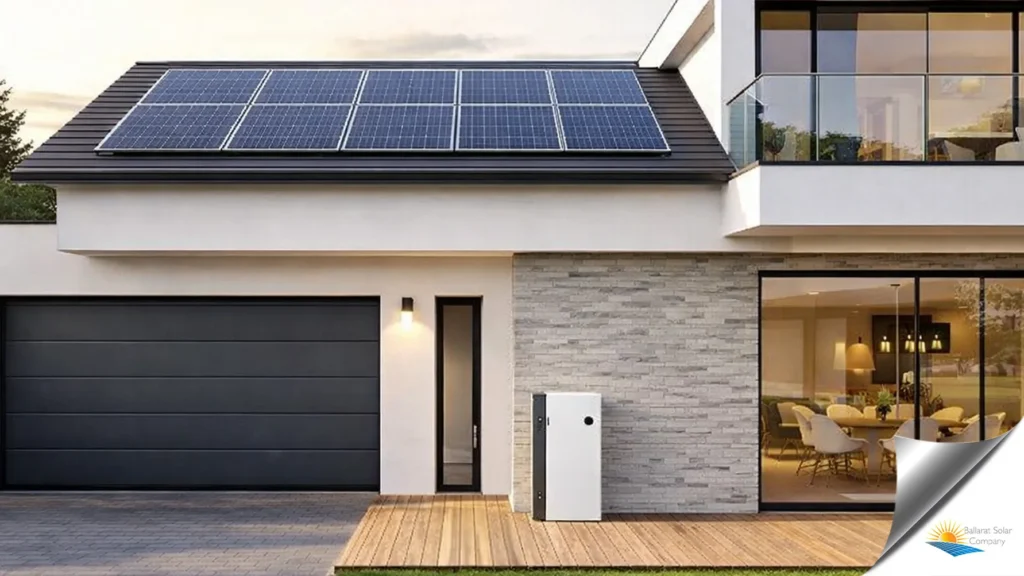
Australian Government’s Cheaper Home Batteries Program is a national discount designed to bring down the upfront cost of installing an eligible solar battery at your home or business. It kicked off on 1 July 2025, and the discount is expected to decline over time through to 2030, so 2026 is a smart year to get your ducks in a row.
As your local solar installer in Ballarat, I’m here to guide you on what to know before you commit: who’s eligible, what counts as an “eligible battery”, what drives pricing, what the install process looks like, and the safety/compliance stuff that genuinely matters in Victoria.
What the program actually is
The Cheaper Home Batteries Program is delivered through the Small-scale Renewable Energy Scheme (SRES), which is administered by the Clean Energy Regulator. Put simply, the “discount” usually appears as an upfront reduction in your quote/invoice via Small-scale Technology Certificates (STCs), rather than you filling out a rebate form and waiting for cash back.:
- The Australian Government describes it as “around a 30% discount” when the program started, and it gradually declines as the STC settings change over time.
- The Department of Climate Change, Energy, the Environment and Water explains that the discount is provided through the creation/trading of STCs and that the government purchases the equivalent number of STCs created for batteries to fund the discount; it also notes the STC Factor will be adjusted to decline more frequently (every 6 months) and at a higher rate.
Who can use it: homes and businesses
This program isn’t just for owner-occupied houses. The eligibility guidance explicitly includes residential and non-residential premises, so small businesses (like offices, workshops, cafés, and community facilities) may also be eligible if they meet the technical requirements.
Eligibility in 2026: the checklist that matters
Here’s the “quick filter” first. If you can tick these off, you’re usually in the right ballpark:
- Battery system is between 5 kWh and 100 kWh nominal capacity.
- STCs can only be claimed for the first 50 kWh of usable capacity (even if the battery is larger)
- Battery is installed with new or existing rooftop solar PV (grid-only batteries that store energy purely from the grid aren’t eligible).
- Solar PV system capacity is 100 kW or less.
- The battery (and relevant inverter equipment) is on the Clean Energy Council-approved product lists.
- Install/design is done by an accredited installer under Solar Accreditation Australia requirements.
Now let’s unpack the bits that trip people up.
1. Nominal capacity vs usable capacity
Manufacturers label batteries by nominal capacity (total storage), but the STC calculation uses usable capacity (what you can actually discharge/use). You can be eligible with a battery up to 100 kWh nominal, but STCs only apply to the first 50 kWh usable.
2. One battery per premises
The Clean Energy Regulator states: only one solar battery system at a premises is eligible for STCs; additional batteries after the first claim aren’t eligible for further STCs. This doesn’t mean you can’t physically add batteries later; it means you need to be careful about how eligibility and claiming work.
3. “It must be new”
Used batteries reinstalled at a new premises aren’t eligible, even if they never claimed STCs before.
4. VPP-capable
If your system is grid-connected, the inverter the battery connects to must be capable of participating in a Virtual Power Plant (VPP). You don’t necessarily have to enrol in a VPP, but the capability needs to be there at install.
5. Existing solar is fine, but the battery-side hardware rules still apply
If you’re adding a battery to an existing PV system, the existing solar PV system needs to comply with state/territory safety rules. It doesn’t necessarily need to be on today’s product list, but the battery system components must be approved, and the inverter connected to the battery has specific requirements, including VPP capability.
6. Expanding/upgrading existing battery systems
You may be able to add capacity if:
- the existing battery has not previously received the discount / claimed STCs, and
- the added capacity is at least 5 kWh, and the total upgraded system stays under 100 kWh nominal.
Stackable systems are allowed, but the final configuration must be on the approved product list at the date of certification, and it needs to be re-certified properly.
How to confirm a battery is “eligible”
The fastest, safest way is to verify the exact model on the approved lists.
- The program guidance points you to the Clean Energy Council-approved battery list and approved inverters/PCE list, these lists are used by networks and government rebate programs, including the SRES.
- The Clean Energy Regulator also states that components must be CEC-approved and installed in a single job for eligibility.
If you’re comparing quotes, ask each installer to write the exact make + model of:
- the battery, and
- the inverter / power conversion equipment it will connect to.
That single step prevents most “oops, not eligible” situations.
What drives pricing in Ballarat, and how to compare quotes properly
Battery pricing moves around a lot, and the program discount is calculated via STCs, which also vary, so any “one-size-fits-all” number you see online is usually… optimistic.
Instead, here’s what actually drives your installed price in Ballarat:
Battery size (kWh usable): bigger storage = higher cost, but not always better value.
Backup capability: “blackout backup” can mean anything from a few essential circuits to whole-home backup, and the switchboard work can be significant.
Your existing solar/inverter setup: adding a battery to older systems can require inverter upgrades or an AC-coupled solution.
Switchboard condition: older boards may need upgrades for compliance and safe integration (especially with backup supply paths).
Cable runs / mounting location: long runs, tricky access, or non-ideal locations add labour.
Network requirements: applications and export limits can influence what’s feasible.
Quote checklist so you’re comparing apples with apples
Ask for an itemised quote that clearly states:
- usable capacity and nominal capacity
- whether backup is included, and exactly what is backed up
- warranty basics (years + throughput/cycles if specified)
- monitoring/app access and any ongoing fees (if any)
- network approval process (who submits what)
- compliance documents you’ll receive in VIC (see safety section below)
Picking the right battery size
Most people overthink battery sizing, but it can be simple if you focus on when you use power.
Step 1: Look at your evening and overnight usage
Batteries shine when they cover your “after-solar” period: cooking, heating/cooling, TV, hot water recovery, overnight loads.
Step 2: Check how much solar you export on a sunny day
If you’re already exporting a decent chunk midday, you’ve got “spare solar” that a battery could store.
Step 3: Decide if you want backup power
Backup changes the design. If blackout cover is a priority, you’ll usually choose between:
- Essential circuits backup (fridge, some lights, internet, maybe a few power points), or
- Whole-home / large-load backup (more complex and usually pricier)
There are also safety and protection requirements when a battery can supply your switchboard during outages, which is why a proper assessment matters.
For businesses
Small businesses often get the best value when they:
- Shift loads into solar hours from equipment, refrigeration, pre-cooling/heating, and
- Use a battery to shave peaks or cover early/late trading.
The good news: the program eligibility covers non-residential premises too, as long as the system meets the criteria.
Ballarat-specific network approvals and applications
In the Ballarat region, you’ll usually be dealing with Powercor for electricity distribution (though it’s always worth confirming since distributors vary by address). The Victorian Government has a simple “find your distributor” page if you’re unsure.
Here’s the key bit many homeowners don’t realise:
Powercor requires an application prior to installation for micro-embedded generation systems, including small-scale batteries. Your installer can usually submit this on your behalf, but it still needs to happen.
That network step is important because it can affect:
- export limits,
- connection approvals, and
- what configuration is allowed at your premises.
What the battery installation process looks like
A tidy battery install isn’t just “mount it and turn it on”. Done properly, it usually looks like this:
- Battery-readiness check
We assess your bills/usage, existing solar, inverter compatibility, switchboard condition, and the best battery location. - Design + product selection (eligible models only)
We confirm the exact make/model is on the approved lists and design around your goals (savings vs blackout cover). - Network application / pre-approval
In many Ballarat cases, this is lodged through Powercor’s process before install. - Installation day
Mount battery, install/upgrade inverter equipment as required, integrate protection devices, label, and commission the system. - Inspection + certificate in Victoria
In Victoria, you should receive a Certificate of Electrical Safety (COES) for electrical installation work. - Handover and monitoring setup
App access, settings, and a quick “how to use it” walkthrough. - STC paperwork / discount reconciliation
For most customers, this is handled through the retailer/installer pathway as part of the quote process under the SRES delivery model.
Can you stack this with other rebates in Victoria?
You can absolutely combine the federal battery discount with other programs in many cases, but each scheme has its own eligibility.
Victorian Solar Homes (PV rebate and interest-free loan)
Solar Victoria offers a solar panel (PV) rebate for eligible homes and also mentions an interest-free loan of up to $1,400 as part of the PV rebate process.
Victorian battery loan: now closed
Solar Victoria states clearly that solar battery loans are no longer available, and it is no longer taking applications for interest-free loans for battery installation.
I’m ready; what's next
If you’re in Ballarat and you’re thinking about a battery in 2026, the best path is:
Confirm you’re eligible (size, solar, approved products, accredited installer). As your installer, we can choose a system based on your usage pattern, and make sure approvals and compliance are done properly, especially network application + Victorian safety certificates.
If you want a no-pressure starting point, we can do a battery readiness check, which will include your accessing existing solar, switchboard, and your goals, and give you two options: best-value savings vs blackout-ready, both designed around eligible equipment and proper approvals.